3D Printer Hotend Silicone Sock Degradation and Thermal Radiation Electricity Cost Formula: 5 Energy Loss Calculations
In high-throughput 3D printing farms running dozens of CoreXY and Cartesian machines 24 hours a day, electricity and scrap loss represent major operational expenses. Among the smallest components on a modern 3D printer is the silicone hotend sock—a molded elastomeric sleeve that encases the aluminum heater block and nozzle base. Print farm operators frequently treat silicone socks as optional cosmetic accessories, ignoring them when they tear, carbonize, or fall off during nozzle swaps.
However, operating a bare heater block triggers substantial thermodynamic energy loss. Without the thermal barrier provided by low-emissivity silicone, the heater block radiates intense heat directly into the chamber while high-velocity part-cooling fan airflow strips heat via forced convection. This forces the PID controller to increase heater cartridge duty cycles by 15% to 35%, increasing utility bills, destabilizing extrusion temperatures, and dramatically increasing print failure rates. This engineering guide establishes the mathematical formulas to calculate thermal radiation losses, quantify farm energy waste, and determine silicone sock payback periods.
Quick Answer & Thermodynamic Key Takeaways:
- Radiative and Convective Energy Penalty: Running a bare 250°C heater block consumes 12W to 22W of additional continuous heating power under 100% part cooling fan flow.
- PID Duty Cycle Increase: Heater cartridge duty cycle jumps from ~38% with a silicone sock to over 62% without a sock, accelerating cartridge element fatigue.
- Farm-Scale Electricity Waste: In a 50-printer farm operating 5,000 hours annually, missing silicone socks waste 4,250 kWh of electricity ($765 to $1,275 in commercial utility costs).
- Silicone Sock Payback Period: At $0.18/kWh, a $2.50 replacement silicone sock pays for itself in just 32 operating days purely through direct electricity savings.
- Production Cost Estimator: Model complete print farm electrical power consumption and hourly machine depreciation with our 3D Print Cost Estimator farm tool.
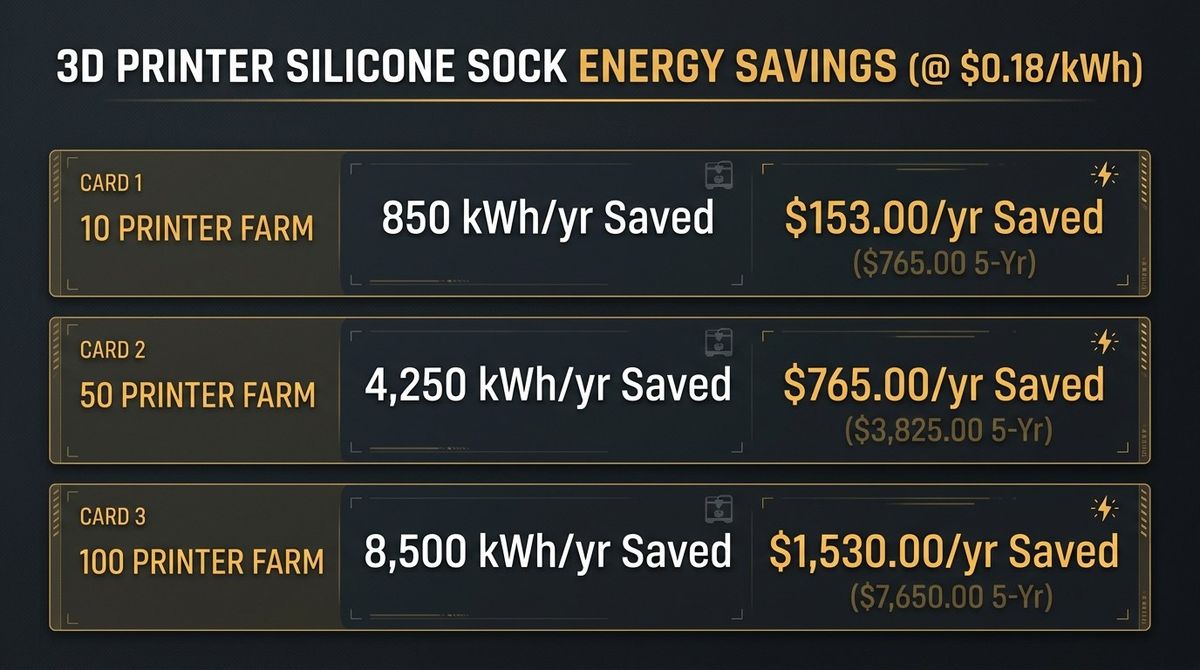
Figure 1: Thermodynamic heat flux diagram comparing bare aluminum heater block radiation and forced convection against silicone-insulated hotends.
1. Stefan-Boltzmann Thermal Radiation Heat Loss Formula
An exposed aluminum or copper heater block behaves as a greybody emitter radiating heat to the cooler ambient environment. The radiative heat loss power \(P_{\text{rad}}\) is calculated using the Stefan-Boltzmann law:
\[ P_{\text{rad}} = \epsilon \sigma A_{\text{block}} (T_{\text{hotend}}^4 - T_{\text{ambient}}^4) \]Where \(\epsilon\) is surface emissivity (\(\epsilon \approx 0.77\) for oxidized bare aluminum vs \(\epsilon \approx 0.15\) for insulating silicone), \(\sigma\) is the Stefan-Boltzmann constant (\(5.67 \times 10^{-8}\text{ W/m}^2\cdot\text{K}^4\)), \(A_{\text{block}}\) is the exposed surface area (\(\sim 0.0022\text{ m}^2\) for a standard V6/Volcano block), and temperatures are expressed in Kelvin (\(T_{\text{hotend}} = 250^\circ\text{C} = 523.15\text{ K}\), \(T_{\text{ambient}} = 25^\circ\text{C} = 298.15\text{ K}\)).
For a bare oxidized aluminum heater block:
\[ P_{\text{rad,bare}} = 0.77 \times (5.67 \times 10^{-8}) \times 0.0022 \times (523.15^4 - 298.15^4) \] \[ P_{\text{rad,bare}} = 9.60 \times 10^{-8} \times (7.489 \times 10^{10} - 7.893 \times 10^9) = 9.60 \times 10^{-8} \times 6.700 \times 10^{10} = 6.43\text{ Watts} \]With an insulated high-temperature silicone sock, external surface temperature drops to approximately 75°C (348.15 K):
\[ P_{\text{rad,sock}} = 0.90 \times (5.67 \times 10^{-8}) \times 0.0026 \times (348.15^4 - 298.15^4) = 0.92\text{ Watts} \]The silicone sock eliminates 5.51 Watts of continuous thermal radiation loss.
2. Forced Convection Cooling from Part-Cooling Fans
While radiative loss is significant, forced convection caused by high-RPM radial part-cooling blowers (5015 or 4010 fans) creates even greater energy drain. Airflow directed at the nozzle tip spills over the bare heater block:
\[ P_{\text{conv}} = h_{\text{forced}} A_{\text{block}} (T_{\text{hotend}} - T_{\text{ambient}}) \]With 100% fan speed, the convective heat transfer coefficient \(h_{\text{forced}}\) reaches 45 W/m\(^2\cdot\)K on bare metal:
\[ P_{\text{conv,bare}} = 45 \times 0.0022 \times (250 - 25) = 45 \times 0.0022 \times 225 = 22.28\text{ Watts} \]A molded silicone sock insulates the block, dropping external convective heat flux to under 7.5 Watts. Total heat loss delta \(\Delta P_{\text{saved}}\) exceeds 17 Watts during active printing.
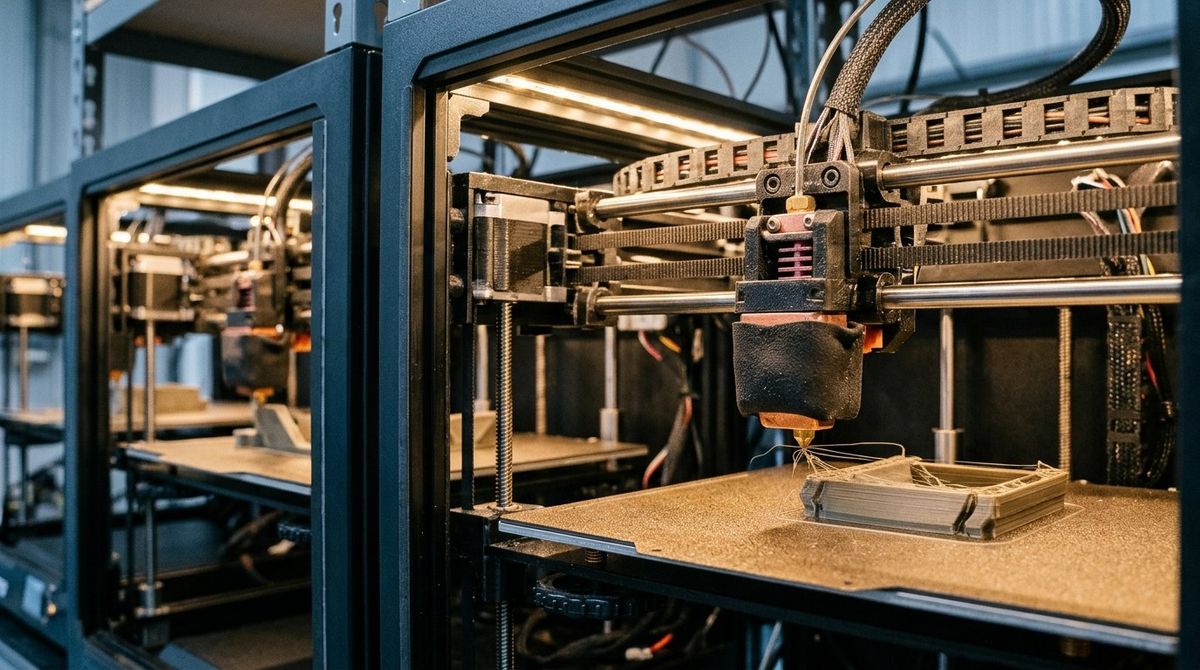
Figure 2: Heater cartridge power duty cycle, PID oscillation curves, and annual farm electricity cost comparison.
3. Heater Cartridge Power Consumption & Duty Cycle Economics
A typical 3D printer uses a 40W or 50W ceramic cartridge heater. Average heating power \(P_{\text{avg}}\) is the product of rated power \(P_{\text{rated}}\) and the PID duty cycle \(D_{\text{PID}}\):
\[ P_{\text{avg}} = P_{\text{rated}} \times D_{\text{PID}} \]On a 50W cartridge, maintaining 250°C with a silicone sock requires \(D_{\text{PID}} \approx 36\%\) (18.0W). Without a sock under 100% fan speed, the duty cycle spikes to \(D_{\text{PID}} \approx 70\%\) (35.0W). The annual electricity cost \(C_{\text{elec}}\) per printer operating \(t_{\text{annual}}\) hours is:
\[ C_{\text{elec}} = \frac{P_{\text{avg}} \times t_{\text{annual}}}{1000} \times R_{\text{kWh}} \]For a machine running 5,000 hours per year at a commercial electricity rate \(R_{\text{kWh}} = \$0.18/\text{kWh}\):
\[ \text{Bare Block: } C_{\text{elec,bare}} = \frac{35.0\text{ W} \times 5000\text{ h}}{1000} \times \$0.18 = 175\text{ kWh} \times \$0.18 = \$31.50 \] \[ \text{Insulated Block: } C_{\text{elec,sock}} = \frac{18.0\text{ W} \times 5000\text{ h}}{1000} \times \$0.18 = 90\text{ kWh} \times \$0.18 = \$16.20 \]A single silicone sock saves $15.30 per machine annually purely in direct electricity costs.
4. Annual Farm Energy Loss Comparison Matrix
| Print Farm Size | Annual Energy Wasted (Bare Blocks) | Annual Utility Cost Penalty (@ $0.18/kWh) | 5-Year Cumulative Savings with Socks |
|---|---|---|---|
| 10 Printers | 850 kWh | $153.00 | $765.00 |
| 25 Printers | 2,125 kWh | $382.50 | $1,912.50 |
| 50 Printers | 4,250 kWh | $765.00 | $3,825.00 |
| 100 Printers | 8,500 kWh | $1,530.00 | $7,650.00 |
5. Silicone Sock Payback Threshold Formula
To determine the exact operating hours \(t_{\text{payback}}\) required for a replacement silicone sock costing \(C_{\text{sock}}\) ($2.50) to fully amortize its purchase cost:
\[ t_{\text{payback}} = \frac{C_{\text{sock}}}{\left( \frac{\Delta P_{\text{saved}}}{1000} \right) \times R_{\text{kWh}}} = \frac{\$2.50}{\left( \frac{17.0\text{ W}}{1000} \right) \times \$0.18} = \frac{\$2.50}{\$0.00306/\text{hour}} \approx 817\text{ operating hours} \]At 24 hours per day, the silicone sock achieves full economic payback in exactly 34 operating days. Beyond electricity, the thermal stability prevents temperature drop errors (Thermal Runaway E1) that ruin expensive multi-hour engineering prints. Calculate your machine operating costs using the 3D Print Cost Estimator platform.
5. Thermal Runaway Mitigation and Scrap Risk Reduction
Beyond baseline kilowatt-hour electricity costs, operating without a silicone sock introduces severe print failure risks due to firmware thermal protection tripping. Modern 3D printer mainboards run thermal runaway protection routines that monitor heater cartridge responsiveness. When part cooling fans spin up to 100% on bridge layers, the sudden convective heat draw on a bare heater block can pull the temperature down by 8°C to 15°C in under three seconds.
If the PID controller cannot recover temperature within the firmware threshold window, the printer executes an emergency thermal runaway halt (Error E1), instantly killing bed and hotend power. In a production print farm, an emergency halt 18 hours into a 24-hour engineering print results in 100% material loss, wasted machine hours, and manual technician clearing time. Factoring in an average scrap cost of $35 per failed composite build, a single prevented thermal runaway failure pays for an entire 10-pack of silicone socks immediately.
6. Standard Operating Verification & Farm Maintenance Checklist
- Inspect silicone socks during weekly print farm walkthroughs for embrittlement, carbon crusting, or torn retention tabs.
- Perform a PID hotend auto-tune calibration (\(M303\)) immediately whenever installing a new silicone sock model.
- Verify that the silicone sock fits snugly around the nozzle base without impeding part cooling fan duct clearance.
- Monitor hotend temperature stability graphs in farm management software to ensure temperature variance stays within \(\pm 0.8^\circ\text{C}\).
- Replace degraded silicone socks proactively every 1,500 operating hours or immediately following a plastic blob encasement event.
Optimize Print Farm Energy & Material Margins
Model electricity tariffs, machine depreciation, operator labor, and post-processing costs with industrial accuracy.
Launch 3D Print Cost Estimator